From Frogs, Logs, Dogs, Slogs, Bogs, Hogs, and Pollywogs - It's the Methow Conservancy Blog!
Occasional posts - from the quirky to the momentous - on the life and times of the Methow Conservancy.
(What you won't find in E-News)
Showing posts with label winter. Show all posts

Sunday, January 29, 2012

Owl Peak Ski

By Mary Kiesau

For nearly two weeks, the skies have been bursting with snow.  For those of us who love winter in the Methow, there have been no complaints, but it has been a shoveling, snow-blowing, plow-truck frenzy with hardly a break in-between storms.  With all the time and work needed to move snow around there's barely been a moment to get out and enjoy the fresh stuff.

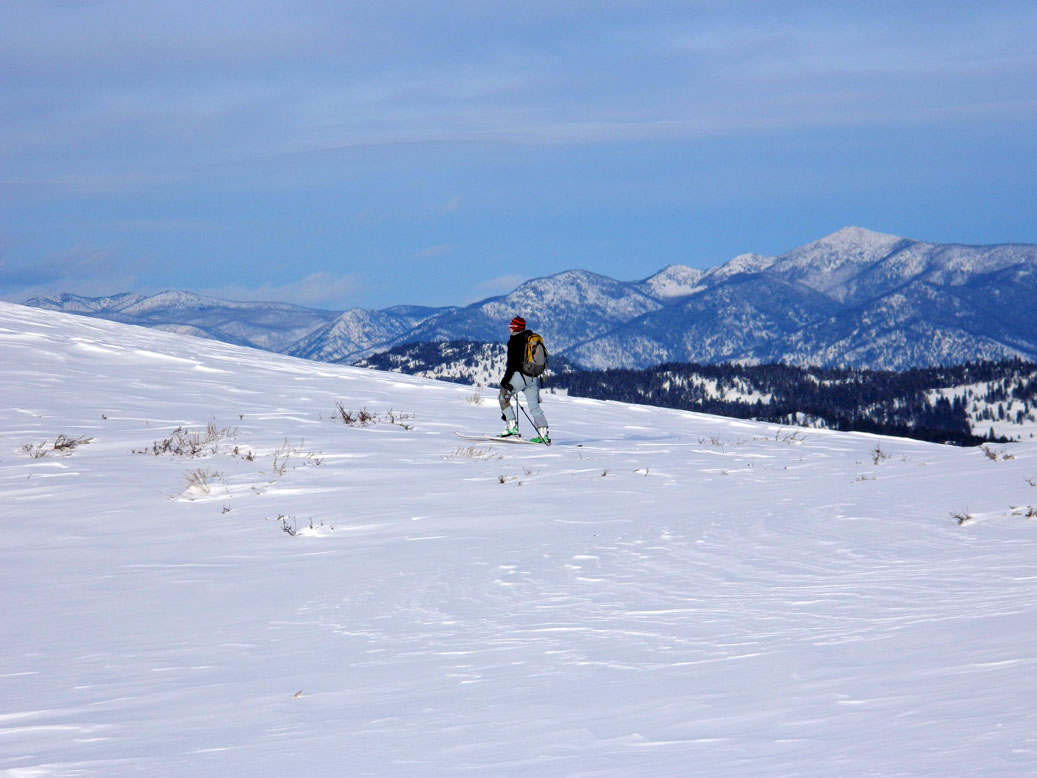
Friday, the clouds parted and bluebird skies appeared.  I knew it would be a gorgeous day but I also had a lot of work to do to prepare for the start of the Conservation Course.  It would be easy for me to stay in the office and get tasks done.  I don't always have the foresight to do something fun and healthy for myself that in the long-run is important to staying productive and focused.  That's where Executive Director leadership comes in!  Our ED, Jason Paulsen, is always encouraging us to get outside, take time away when we need it, and enjoy the Methow that we work to protect.  On Friday, he set a fine example for us and instigated a staff ski into Owl Peak, a stunning property in the Rendezvous that we currently own (and which is for sale!).  Heide Andersen, our Stewardship Director, and I went along.

Owl Peak was bequeathed to us by Ann Lennartz, a long-time friend and donor of the Methow Conservancy.  For me, it's one of the most breath-taking places in the Valley.  Along with it's incredible beauty and amazing views, it's surprisingly hidden (though really not all that remote) and I feel peacefully alone and calm when I'm there.  Not lonely, because you have the earth (covered in native plants in the summer), the birds (ravens and woodpeckers and bluebirds galore), the sky (for as far as you can see), the mountains (like you can reach out and touch Mount Gardner), and, when you want them, views of Winthrop and the Valley (and you can totally imagine where and how a glacier carved out what we call home).  It's a special place and I feel lucky to be able to soak it in and be a part of it for this moment in time.    

So, here are some photos from our Friday afternoon ski to Owl Peak.  Enjoy!


Skinning up the driveway
Ski to your front door!

I love the little guest cabin.
And I love the red tiles in the small, custom-built house.
Sastrugi, is a long, wave-like ridge of snow formed by the wind.


heading uphill from the house and cabin with Gardner in the background
can't go under it; can't go over it (yes, he went around it!).
Heide skinning up a ridge with peaks in the Chewuch drainage beyond her.

Self-Portrait
A World with a View (of Winthrop)
Heide & Jason skinning up
Heide & Jason with Gardner looming large.  We stripped skins here and skied down!
A sepia-induced sunset on the Owl Peak property.  What a way to spend a Friday afternoon!


Tuesday, December 20, 2011

...and a Partridge in a Chokecherry Tree

by Mary Kiesau, naturalist-in-training

Winter is here, and while there isn't a ton of snow, what has been abundant lately are wildlife sightings.  Maybe the snow makes creatures easier to see -- a tawny brown coyote crossing a field of white is much easier to spot than one in a sea of dead grass and weeds.  Maybe some animals are spending more time lower in elevation now.  Or maybe, some folks have just been lucky!

These blog photos all started a few weeks ago when co-worker Jeanne White came in asking for help in identifying an interesting looking bird she had seen several times on Lewis Butte.  At first, I thought she was perhaps seeing Harrier Hawks, but after a quiz of characteristics, we determined that she was seeing Short-Eared Owls (Asio flammeus).  And, what do you know...  the Sibley guide says, "can be confused with Northern Harrier."  These owls are in the Valley year-round, hanging out in the shrub-steppe or agricultural fields, searching for rodents.  And while they are often out in the daytime, they are really not commonly seen.  The sighting was interesting enough that local naturalist Dana Visalli went out in search of them after hearing from us.  He came back with this photo.

Jeanne was on a wildlife roll when right after the owls she saw a bobcat (Lynx rufus)on the side of the road eating a dead deer (most likely road-kill).  Bobcats are closely related to Lynx and look very similar but there are some key differences in appearance.  Bobcats are about twice the size of a house cat, whereas lynx are quite a bit bigger.  Both cats have distinctive ear tufts but a bobcat's are relatively small whereas a lynx's are clearly long.  Bobcats tend to have mottled, pattern fur that is often tones of brown, and a lynx is typically more gray with little to no patterns.  A track in the snow is the dead give away though.  Lynx practically have snowshoes on their feet - there is so much fur that toe pads typically don't show and the size can be up to 5.5 inches by 5.5 inches.  Bobcat tracks are much smaller - up to 2.5 inches by 2.5 inches - and you can almost always make out the four toes.

One week later (last week), local naturalists Victor Glick and Libby Schreiner were out on one of their daily wildlife jaunts and guess what they came across(!).  A cougar (Puma concolor) and a pine marten (Martes americana!)  Those lucky dogs.  And, lucky for us they got some pretty great photos too.


The partridge, you ask?  Yes, friends in the Rendezvous just reported seeing flocks of gray partridges.  Here's a picture from Wikipedia.


From all of us at the Methow Conservancy, we hope you are finding festive and active ways to enjoy these long, dark days around the Winter Solstice.  If these sightings are any indication, there's a lot going on out there in our wintery world!  

Wednesday, November 9, 2011

The White-Headed Salt Eagle Returns!

By Mary Kiesau, Conservancy bird nerd

Yes, we are into Latin or Scientific names around here, mostly because they are just so interesting, or maybe because it makes us look smart (or not so smart as the case may be with our last post from Jason who used the scientific name for Western Larch when he really meant to be referring to Subalpine Larch!  We'll let him stick to running the organization).  ANYWAY, today we are talking about the Bald Eagle with the fancy name of Haliaeetus leucocephalus.  To decipher this we look to the Greeks where hali = salt, aeetus = eagle, leuco = white, cephalis = head.  That's the white-headed salt eagle, or sea eagle as it is often called, but we'll stick to Bald Eagle today.

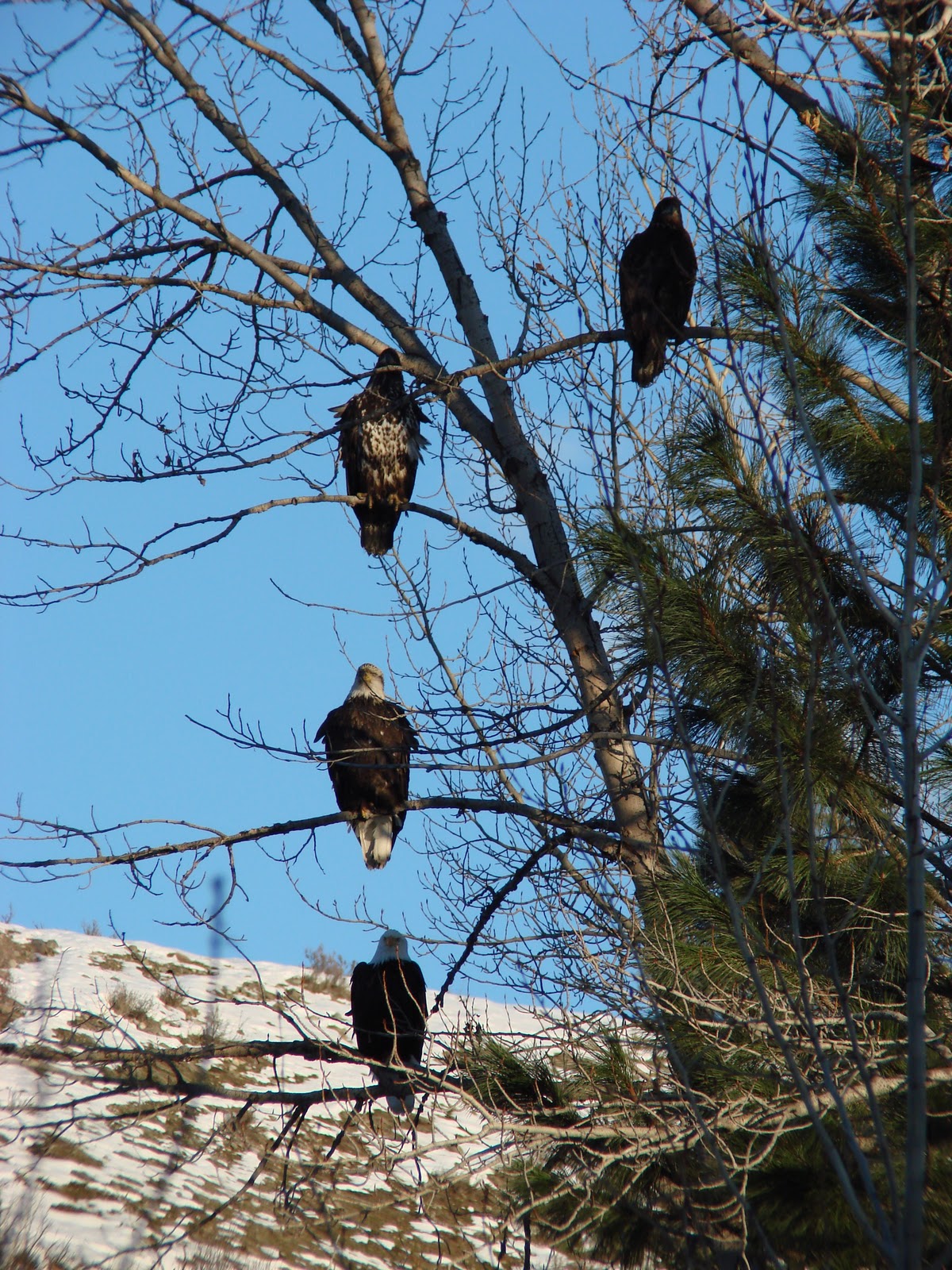
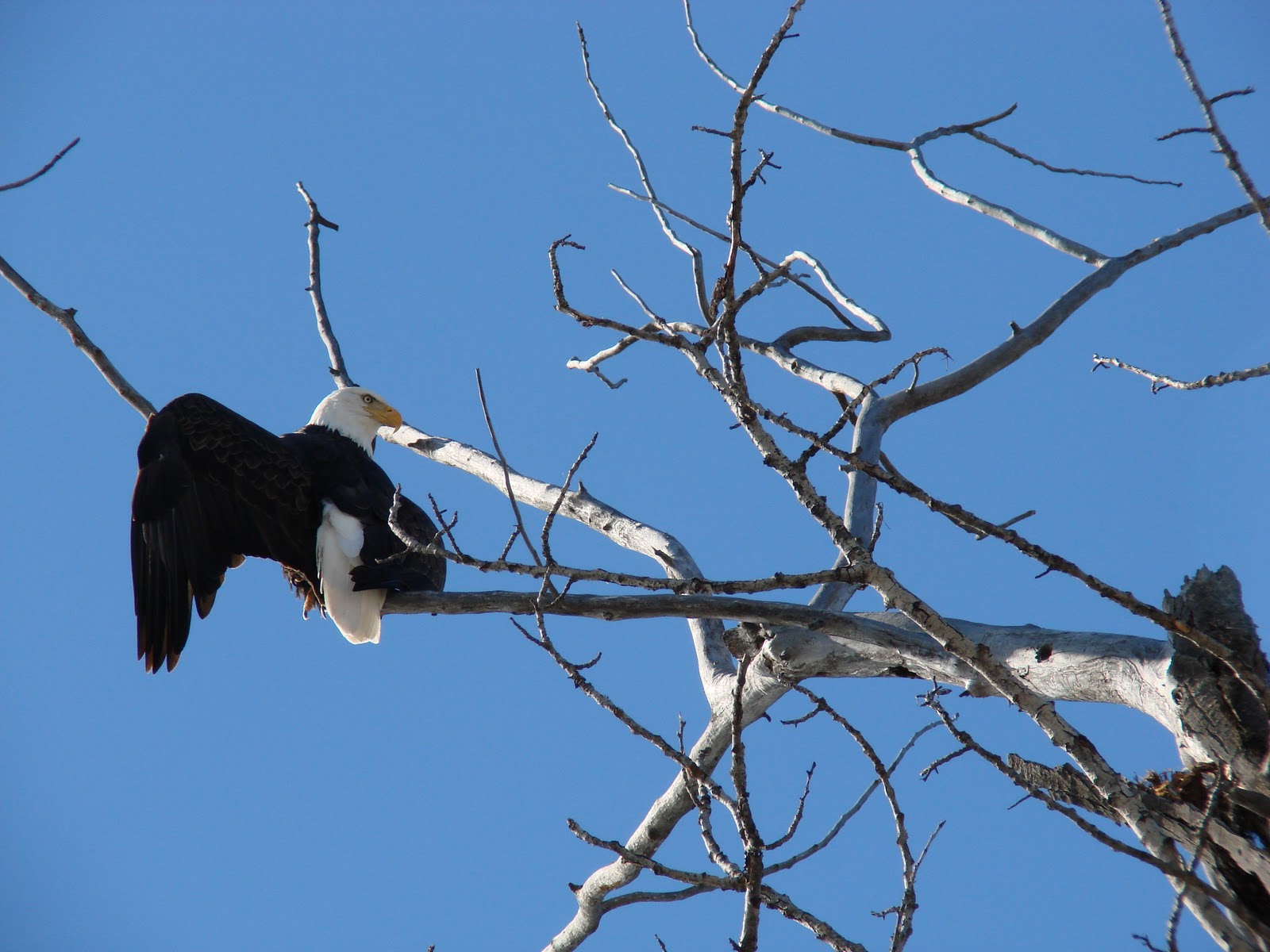
Have you noticed there has been a considerable increase in these big birds in the last week or so?  In trees along the highway, in the rivers eating fish, flying low through the valley....yes, seasonal migration is on and eagles that spend their summers further north are returning here (their birth place) for the winter.  (Some stay here year-round, but many more are here Nov-March).

Here's some info about Bald Eagles along with some local photos taken by yours truly:

 Bald eagles historically occurred throughout the contiguous United States and Alaska. The largest North American breeding populations are in Alaska and Canada, but there are also significant bald eagle populations in the Great Lakes states, Florida, the Pacific Northwest, the Greater Yellowstone area, and the Chesapeake Bay region.  In the fall, eagles begin moving to their wintering grounds, which can be throughout the US but mostly in the Midwest and West near open water and rivers, including the Methow Valley of course.

 It takes 4 to 5 years for juvenile eagles’ mottled brown and white plumage to change to dark brown with the distinctive white head and tail.  This is also when they begin to breed.  See various stages of markings below.
Eagles mate for life, typically nesting in the tops of large trees; nests may reach 10 feet across and weigh a half ton.  The birds travel great distances but usually return to breeding grounds within 100 miles of where they were raised.

Breeding bald eagles typically lay one to three eggs once a year, and they hatch after about 35 days. The young eagles are flying within three months and are on their own about a month later. Young are as big as adults when they fledge – they gain 10 lbs in 10 weeks. 

Female adults may weigh 14 lbs and have a wingspan of 8 feet.  Male eagles are smaller, as is the case in many birds, weighing up to 10 pounds with a wingspan of 6 feet.

Bald eagles are opportunistic feeders with fish comprising much of their diet.  They also eat waterfowl, shorebirds, small mammals, turtles, and carrion.  Here in the Methow we often see eagles eating dead deer on roadsides or over embankments.  Because they are visual hunters, eagles typically locate their prey from a conspicuous perch, or soaring flight, then swoop down and strike.  Eagles need to eat about 11 lbs of food a day in the winter.  Note the bloody face (and feet) of this eagle that was recently feeding on roadkill deer.
At night, wintering eagles often congregate at communal roost trees, in some cases traveling 32 miles or more from feeding areas to a roost site.  It is thought that communal roasting helps the birds communicate and find food.
To distinguish Bald and Golden Eagles at any age, the lower part of the bald eagle’s legs are bare. The entire legs of golden eagles are feathered.  Golden are noticeably larger as well, but for more of us the birds need to be side by side for us to "notice." 

Bald eagles may live 15 to 25 years in the wild!

On June 28, 2007, the US Fish & Wildlife Service removed the Bald Eagle from the list of threatened and endangered species, and deemed it “recovered.”  The bird is still protected by the Migratory Bird Treaty Act and the Bald and Golden Eagle Protection Act.


Happy Eagle Watching!